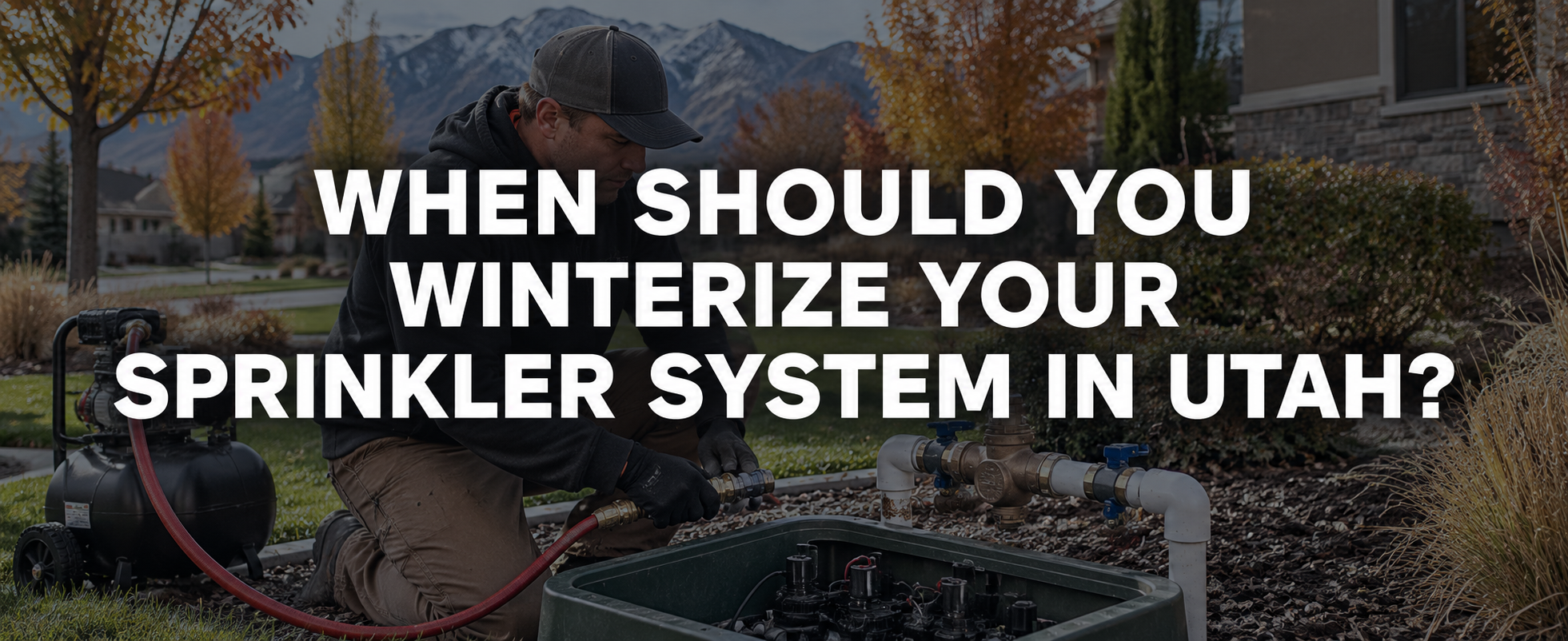
When Should You Winterize Your Sprinkler System in Utah?
Utah homeowners spend all summer relying on their sprinkler systems.
Then fall arrives, the lawn needs less water, nighttime temperatures begin dropping, and one important question comes up:
When should you winterize your sprinkler system?
The simple answer is: before freezing temperatures have a chance to damage water-filled irrigation components.
You do not need to wait until winter officially begins. In Central Utah, the goal is to have your system shut down and protected before repeated freezing nights become a concern.
Waiting until the lawn is covered in frost is taking an unnecessary risk.
Why Does a Sprinkler System Need to Be Winterized?
Water expands when it freezes.
If enough water remains trapped inside irrigation pipes, valves, sprinkler heads, backflow components, or fittings, that expansion can put pressure on the system.
The result may not become obvious until spring.
You turn the irrigation system back on and discover:
- Cracked fittings
- Leaking pipes
- Broken sprinkler heads
- Damaged valves
- Problems around the backflow assembly
- Zones that no longer operate correctly
Utah's Division of Water Resources recommends winterizing sprinkler systems before the first frost to help avoid pipe damage caused by freezing.
That makes winterization preventive maintenance rather than something you want to think about after damage has already occurred.
So What Is the Best Time to Winterize Sprinklers in Utah?
There is not one perfect calendar date for every Utah home.
Weather varies by elevation and location, and Central Utah communities can experience cold nights earlier than other parts of the state.
Instead of choosing a date months in advance, watch the weather.
Once overnight temperatures are consistently dropping and your landscape no longer needs regular irrigation, it is time to start thinking seriously about winterization.
A good rule is:
Do not wait for the first hard freeze to remind you.
By then, water may already be sitting in vulnerable parts of the irrigation system.
The Utah Division of Water Resources also recommends reducing irrigation as temperatures cool. In many parts of Utah, outdoor watering needs decrease significantly during fall before irrigation is shut down for the winter.
Don't Confuse “Turning Off the Sprinklers” With Winterizing Them
This is one of the biggest misconceptions homeowners have.
Turning the irrigation controller to OFF does not necessarily remove water from the system.
There may still be water inside:
- Main lines
- Lateral lines
- Valves
- Sprinkler bodies
- Backflow components
- Low areas in the piping
That water is the concern.
A properly winterized system addresses both the water supply and the water remaining within the irrigation components.
C&K Landscaping's irrigation and sprinkler services include fall winterization and blowouts for homeowners throughout Central Utah.
What Happens During Sprinkler Winterization?
The exact process depends on how the irrigation system was designed.
A typical winterization may involve several steps.
Shut Off the Irrigation Water Supply
The water feeding the sprinkler system needs to be shut off so additional water does not enter the lines.
This is separate from simply turning off the controller.
Release Pressure
Pressure remaining within the irrigation system needs to be relieved.
Depending on the design, valves may be opened so the system can begin draining.
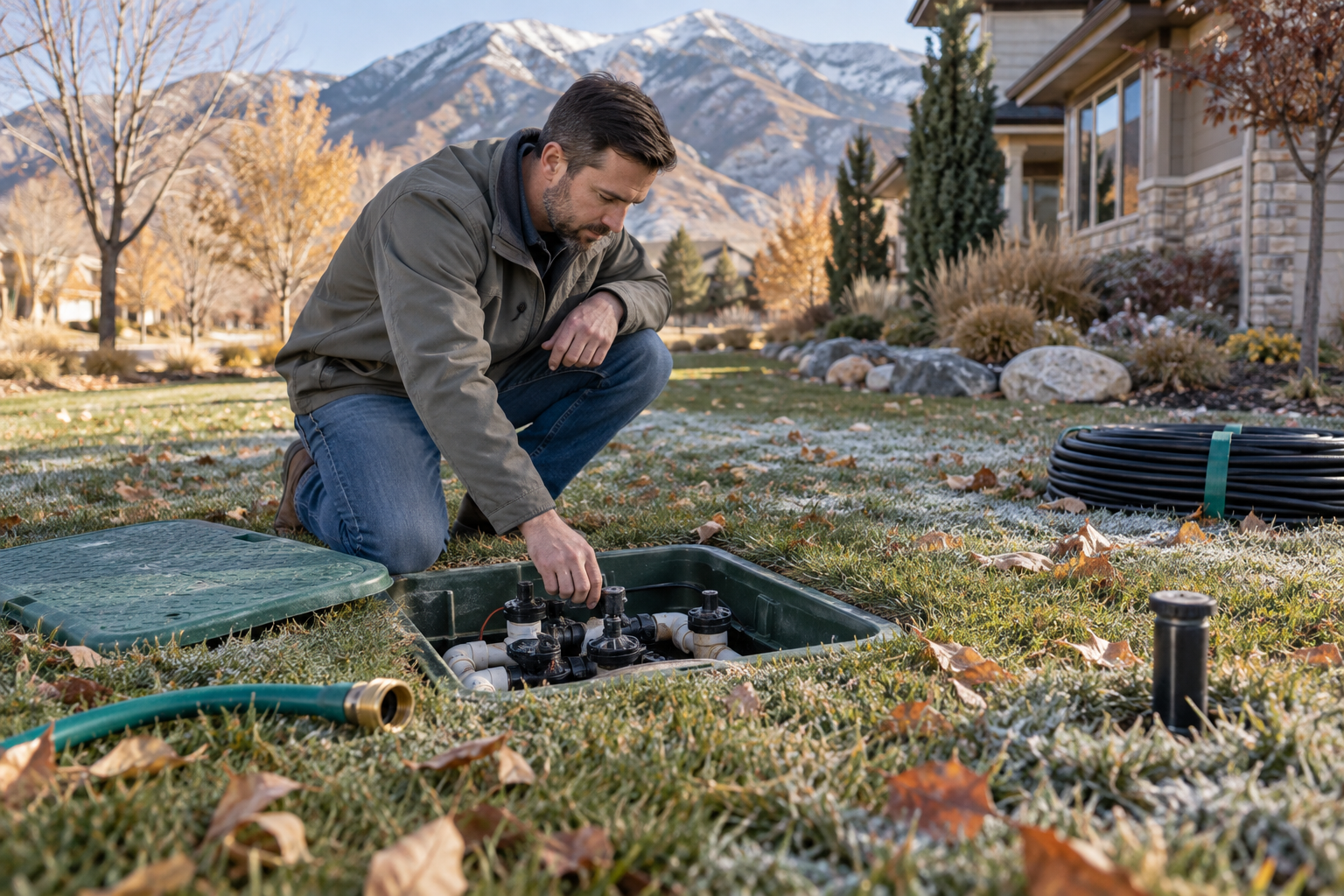
Drain the Irrigation Lines
Some systems have manual or automatic drain valves.
Other systems require compressed air to remove water remaining inside the lines.
Colorado State University Extension recommends removing water from irrigation systems before winter because freezing water can damage pipes, fittings, valves, sprinklers, pumps, and other components.
Protect the Backflow Assembly
Backflow prevention components can also hold water.
They may require their own winterization procedures depending on the type installed.
This is another reason homeowners should know how their specific system is configured instead of assuming every sprinkler system is winterized exactly the same way.
Adjust the Controller
The irrigation controller also needs to be placed into the appropriate off, rain, or winter setting.
Some controllers retain programming while irrigation is disabled, which makes spring startup easier.
What Is a Sprinkler Blowout?
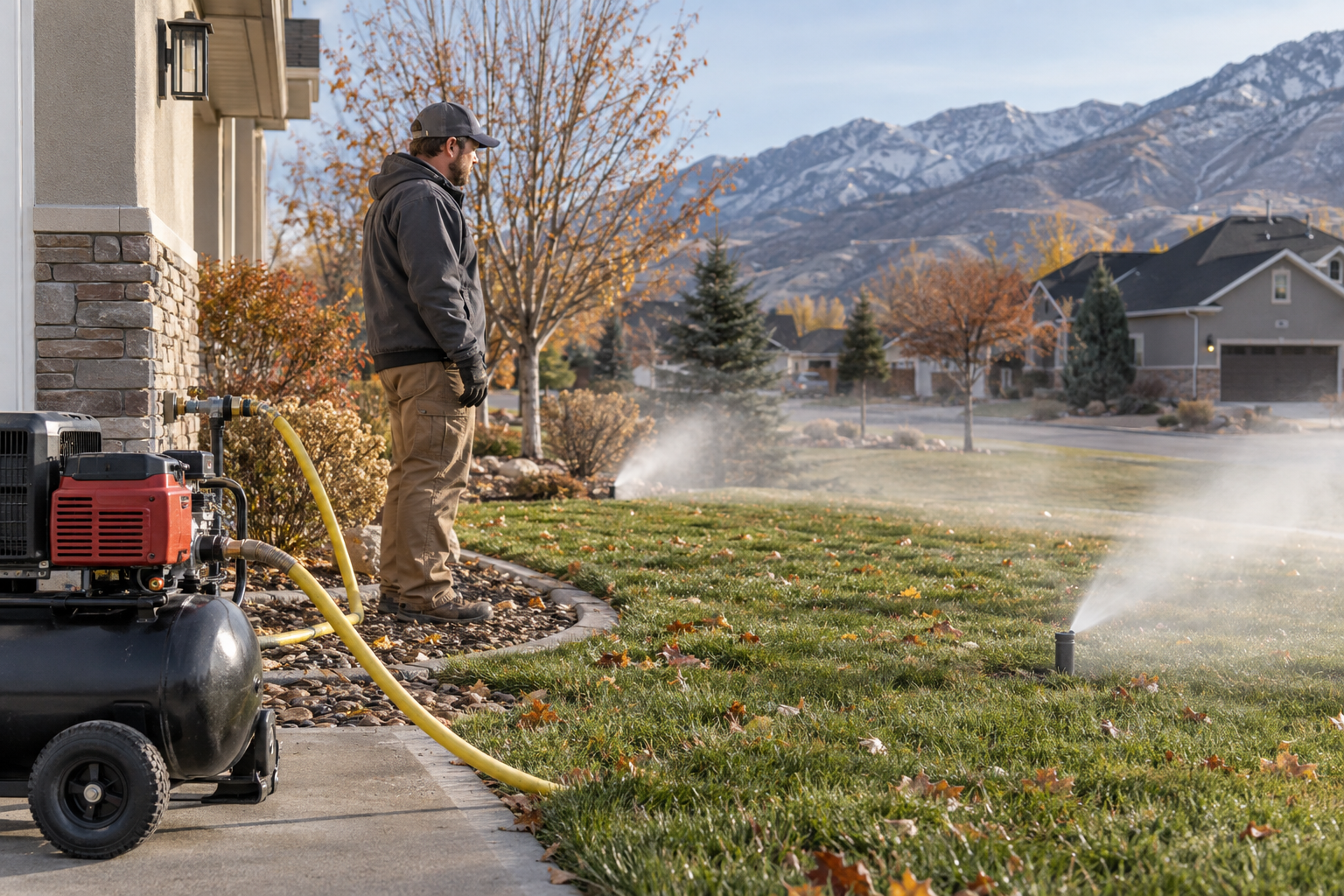
When people talk about “blowing out the sprinklers,” they mean using compressed air to push water out of irrigation lines.
It sounds simple.
Connect an air compressor and push out the water.
But there is an important catch:
Compressed air can damage an irrigation system when it is used incorrectly.
Too much pressure can damage pipes, fittings, valves, sprinkler heads, and other components.
Different piping materials also tolerate different pressures.
Colorado State University Extension specifically cautions homeowners about using the correct air volume and pressure when performing sprinkler blowouts.
This is one of those home-maintenance jobs where having a powerful air compressor does not necessarily mean you have the right equipment or setup.
Can I Winterize My Own Sprinkler System?
Some homeowners can winterize certain irrigation systems themselves.
The answer depends on:
- The system design
- Pipe material
- Drain locations
- Backflow assembly
- Number of zones
- Whether compressed air is required
- Whether you know the safe operating pressure
- Your familiarity with irrigation systems
A simple system with properly located drains may be straightforward.
A more complicated system may not be.
If you are unsure where the main irrigation shutoff is, how your backflow device works, or what pressure the system can safely handle, hiring someone familiar with irrigation systems can be far less expensive than repairing freeze damage in spring.
C&K answers other common irrigation questions on its landscaping and irrigation FAQ page, including whether irrigation systems need to be winterized.
Signs You Should Schedule Winterization Soon
You probably do not need to watch the calendar as closely as you need to watch your yard and the forecast.
It is time to plan your winterization when:
- Overnight temperatures are regularly getting colder
- Lawn growth has slowed considerably
- Your watering schedule has already been reduced
- Trees and shrubs are moving toward dormancy
- Your secondary irrigation water is being shut off
- Freezing nighttime temperatures are appearing in the forecast
If you wait until every irrigation company in the area is receiving calls because a major freeze is forecast for tomorrow night, scheduling may become harder.
Planning ahead gives you more flexibility.
Should You Stop Watering Everything When You Winterize the Sprinklers?
Not necessarily.
This is where sprinkler winterization and plant care become two separate issues.
Your automatic irrigation system may need to be shut down to protect it from freezing while certain trees or shrubs could still need occasional moisture if fall conditions are unusually dry and the soil remains unfrozen.
That does not mean keeping the entire sprinkler system running.
Plants that need supplemental fall moisture may sometimes be watered separately depending on weather and landscape conditions.
The important thing is not to leave an irrigation system vulnerable just because one part of the landscape might still need occasional water.
What About Drip Irrigation?
Drip systems also need fall attention.
Because tubing, filters, regulators, valves, and emitters may retain water, homeowners should not assume drip irrigation is automatically protected simply because the tubing is flexible.
How a drip system should be prepared depends on its design.
Some components may need to be:
- Drained
- Disconnected
- Stored
- Inspected
- Protected from freezing
If your landscape has both traditional sprinklers and drip irrigation, make sure both systems are considered during winterization.
Don't Forget About Garden Hoses
This is simple but easy to overlook.
Disconnect garden hoses from outdoor faucets before prolonged freezing weather.
A hose left connected can trap water and contribute to freeze problems around the hose bib or plumbing.
Drain hoses before storing them so they are ready to use again in spring.
While you are walking around the property, also look for:
- Exposed irrigation components
- Leaking faucets
- Damaged valve boxes
- Broken sprinkler heads
- Unusual wet areas
- Components that may need repair before spring
Fall is a good time to make notes while you still remember where the problems are.
What Happens If You Winterize Too Early?
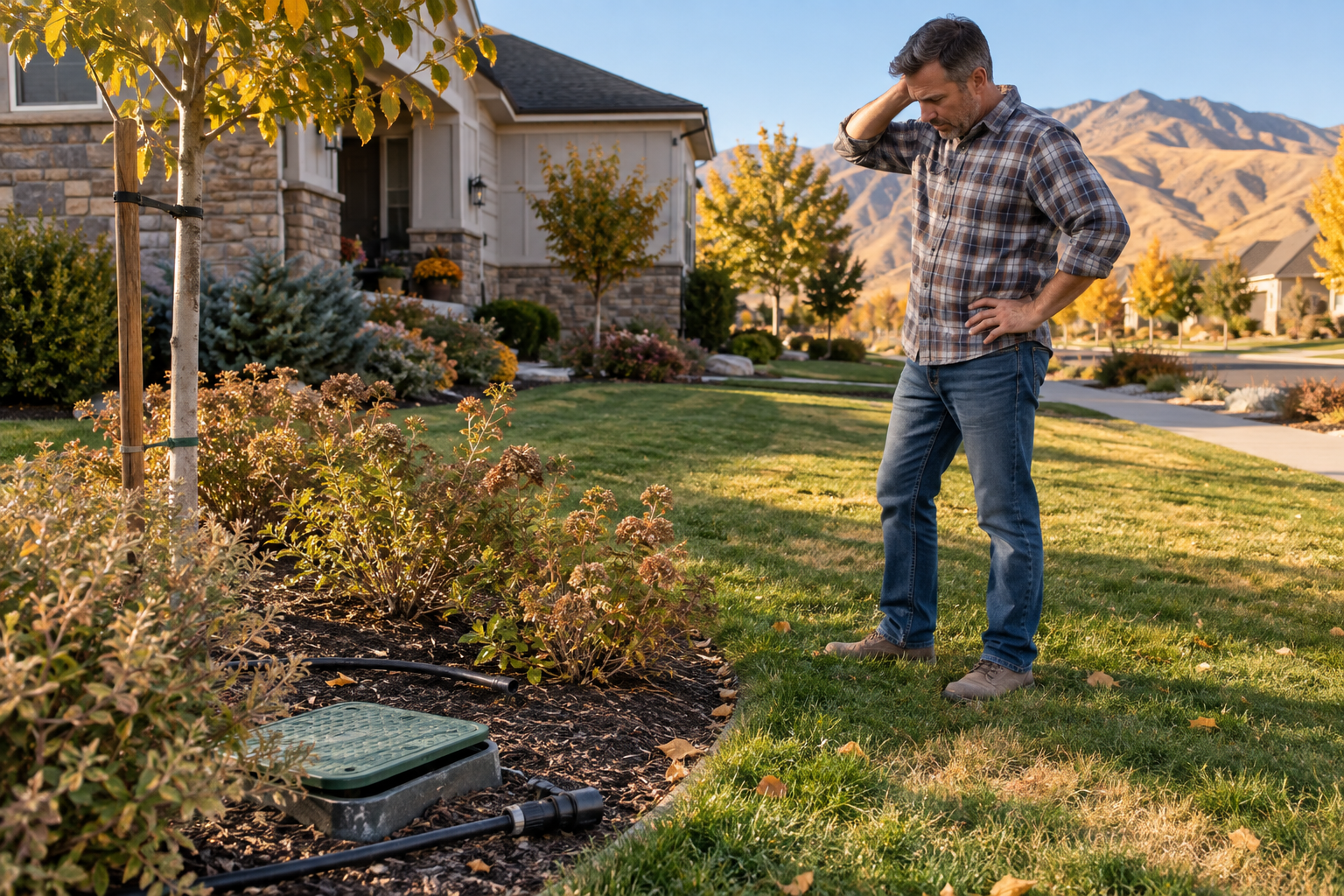
Homeowners sometimes worry about shutting the system down too soon.
The main concern is whether the landscape still requires irrigation.
Instead of thinking of winterization as a specific date, think of it as the point where two conditions meet:
The landscape's regular irrigation needs have dropped substantially, and freezing weather is becoming a realistic threat.
That timing will vary from year to year.
Utah's official homeowner landscape guidance recommends adjusting irrigation seasonally and winterizing before frost conditions can damage the system.
If a stretch of unusually warm, dry fall weather follows winterization, individual landscape areas can be evaluated separately rather than reactivating the entire automatic irrigation system without considering freeze risk.
What Happens If You Winterize Too Late?
This is where the bigger risk lies.
One cold night may not destroy every irrigation system.
But there is no good reason to gamble on it.
Water can remain in places you cannot see.
A valve box may look fine from above while water remains inside a component below.
A line may appear drained but retain water in a low spot.
Freeze damage can also occur without becoming visible immediately.
The first clue may arrive months later when the system is started in spring.
Spring Repairs Can Cost More Than Fall Prevention
Think about everything involved in repairing underground irrigation.
A damaged part may require:
- Diagnosing the leak
- Locating the damaged component
- Digging
- Replacing pipe or fittings
- Repairing valves
- Replacing heads
- Restoring soil or turf
- Repressurizing and testing the system
That is a lot of work compared with preparing the system correctly in fall.
Winterization is not the most exciting landscaping project.
But neither is digging up a lawn in April because a pipe cracked underground.
A Quick Utah Sprinkler Winterization Checklist
Before freezing weather settles in, check these items:
Watch the Weather
- Pay attention to overnight temperatures
- Do not wait until after a major freeze
Reduce Watering
- Adjust the schedule as fall temperatures decline
- Avoid running a midsummer watering schedule in cool weather
Inspect the System
- Look for broken heads
- Check for leaks
- Note valve or pressure problems
Shut Off Irrigation Water
- Know where the irrigation supply is controlled
Drain the System
- Use the proper drainage method for your system
- Arrange a professional blowout when appropriate
Protect Components
- Address backflow devices and exposed irrigation parts
Adjust the Controller
- Use the appropriate winter or off setting
Disconnect Hoses
- Drain and store garden hoses
Make a Spring Repair List
- Record anything you noticed during the final fall inspection
Schedule Sprinkler Winterization Before Utah's Freezing Weather Arrives
The best time to think about sprinkler winterization is before you're standing outside on a freezing night wondering whether there is still water inside the pipes.
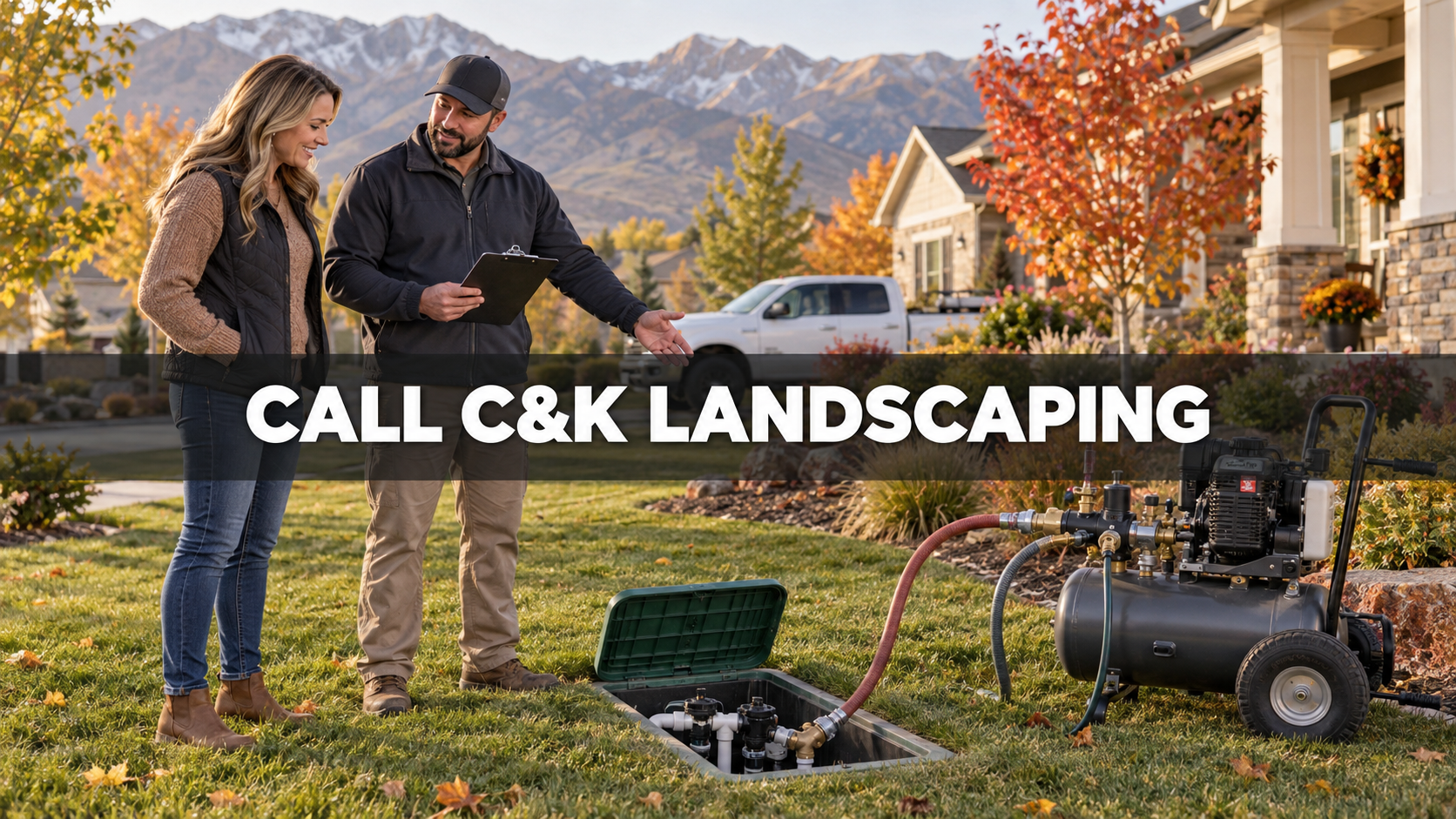
C&K Landscaping provides irrigation installation, sprinkler repair, seasonal startups, fall winterization and blowouts, smart-controller services, and backflow testing throughout Central Utah.
C&K serves communities including Richfield, Salina, Gunnison, Manti, Mt. Pleasant, Ephraim, Monroe, Central Valley, Elsinore, Annabella, and surrounding areas.
If you aren't sure whether your irrigation system is ready for winter, have it checked before freezing weather makes the decision for you.
A little fall preparation can save you from a much bigger sprinkler problem when spring arrives.
Topics: