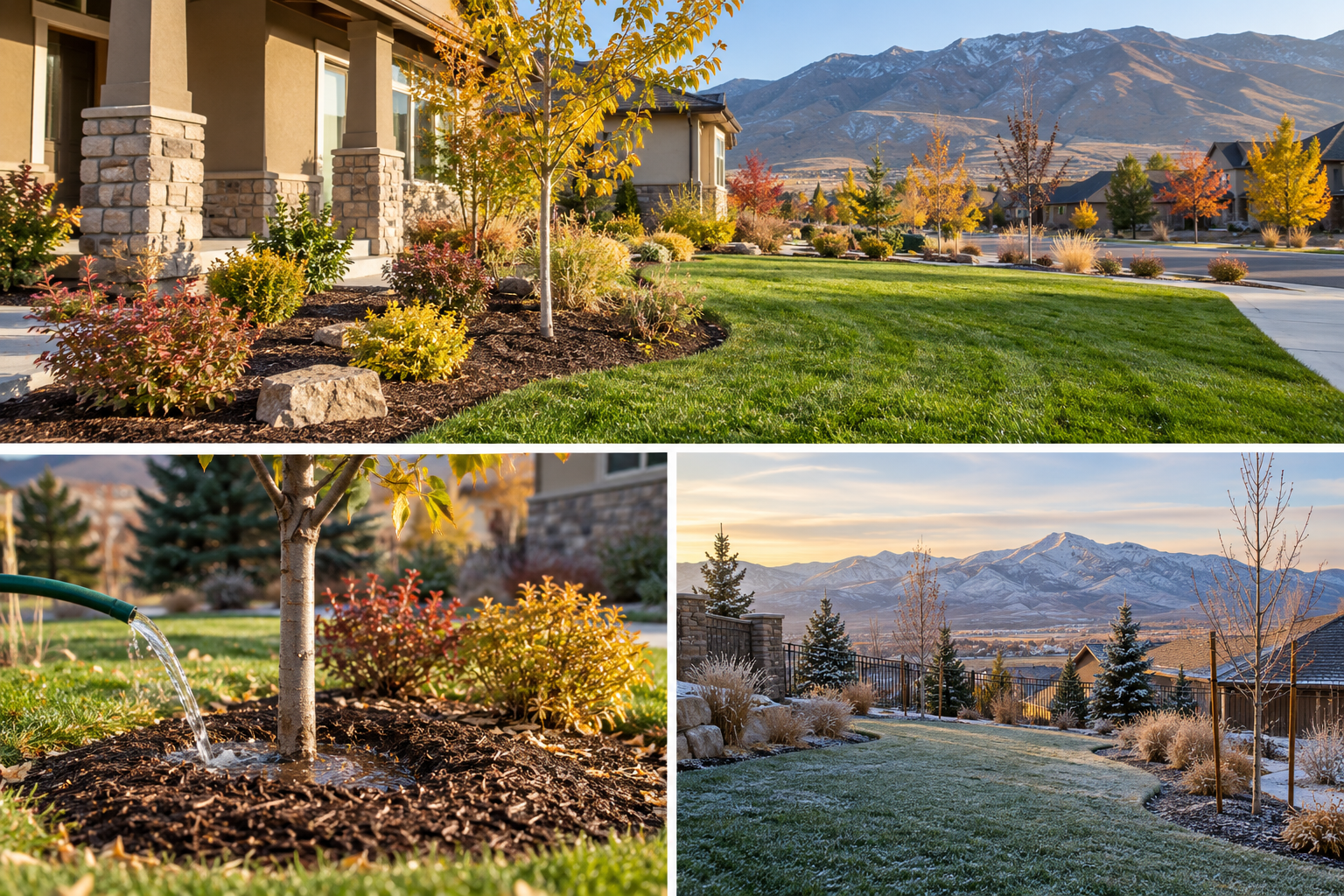
Installing a new landscape is exciting. Fresh sod changes the look of a yard almost overnight, while new trees and shrubs begin creating the structure, shade, privacy, and character that will develop over the next several years.
But if your landscaping was installed this year, the first Utah winter is an important milestone.
New sod, trees, and shrubs haven't had years to establish deep, extensive root systems. That means they can be more vulnerable to dry soil, fluctuating temperatures, freezing conditions, winter wind, and mistakes such as shutting off water too early.
Fortunately, a few thoughtful steps in the fall can give new landscaping a much better start.
For Central Utah homeowners, the goal isn't to keep plants actively growing all winter. It's to help them enter dormancy healthy, hydrated, and well rooted so they're prepared to resume growth when spring arrives.
Why the First Winter Matters for New Landscaping
A mature tree or established lawn has a root system that extends well beyond what you see above ground. Newly installed landscaping doesn't have that advantage yet.
During the first growing season, much of a plant's work happens underground as roots begin expanding into the surrounding soil.
That root establishment matters because roots provide access to both moisture and nutrients. A stronger root system also helps plants tolerate environmental stress more successfully.
Utah State University Extension notes that newly planted trees and shrubs need more frequent watering until their root systems become established. It also recommends watering trees and shrubs deeply rather than relying on frequent, shallow irrigation. Utah State University Extension
That's one reason fall care shouldn't stop simply because daytime temperatures have cooled.
Keep Watering Until the Landscape Is Ready for Winter
One of the easiest mistakes to make is assuming cool weather means new landscaping no longer needs water.
Plants may use less water as temperatures fall, but roots can still need moisture.
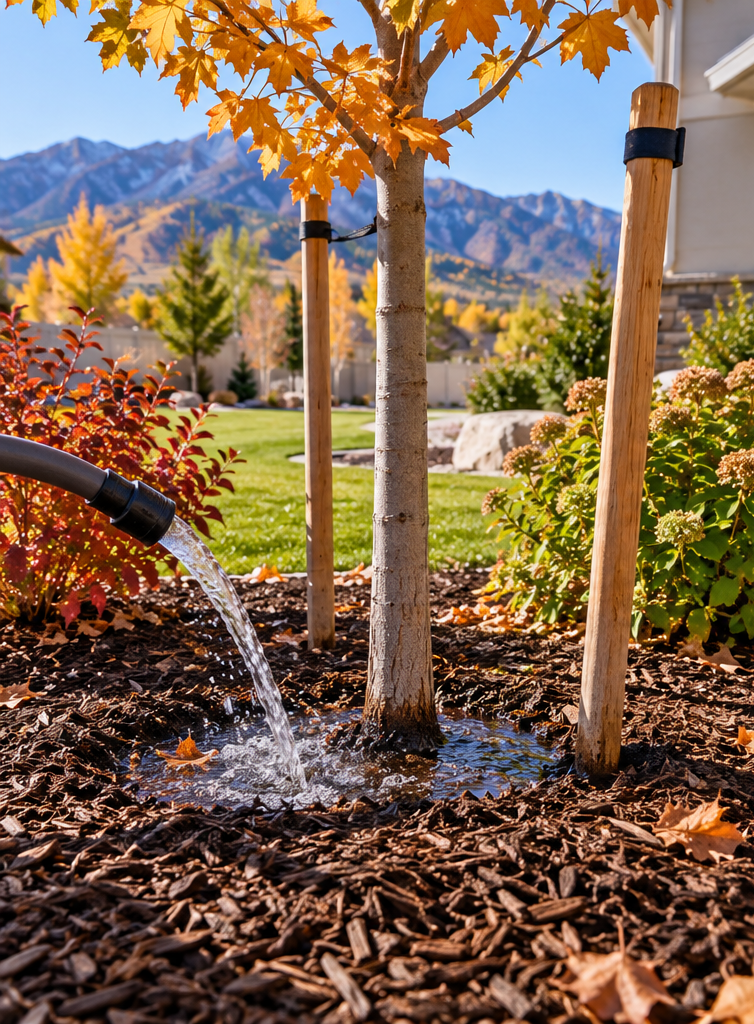
New Trees and Shrubs Need Deep Water
Instead of giving trees and shrubs a little water every day, focus on watering deeply enough to reach the root zone.
Utah State University Extension recommends watering trees and shrubs to approximately 18–20 inches deep and explains that deeper watering encourages deeper root development. Soil type also makes a difference: sandy soils absorb water differently than heavier clay soils, so there isn't one perfect watering duration for every Central Utah property. Utah State University Extension
You can read USU's detailed recommendations in its guide to efficient irrigation of trees and shrubs.
Before watering again, check the soil rather than relying entirely on the calendar. The goal is consistent moisture in the root zone—not constantly saturated soil.
Don't Drown New Plants, Either
More water isn't automatically better.
Soil that remains saturated can deprive roots of oxygen. USU specifically cautions against daily tree watering and recommends larger, less frequent applications instead. Utah State University Extension
That balance becomes especially important as temperatures cool and evaporation slows.
If you're unsure whether your irrigation system is delivering water where your new plants actually need it, C&K Landscaping can help evaluate the overall landscape and irrigation setup. Start with the C&K Landscaping website or request a free on-site consultation. C&K serves homeowners throughout Central Utah, including Richfield, Salina, Gunnison, Manti, Mt. Pleasant, Ephraim, Monroe, Central Valley, Elsinore, and Annabella. C&K Landscaping
Give New Sod Time to Establish Before the Ground Freezes
New sod requires slightly different care because you're trying to establish an interconnected root system between the sod and the soil beneath it.
Immediately after installation, sod generally needs more frequent irrigation. As roots begin establishing, watering can gradually transition toward deeper, less frequent applications.
By fall, pay attention to actual soil moisture and weather rather than continuing a midsummer irrigation schedule automatically.
Also try to minimize unnecessary traffic on newly established turf, particularly when the soil is very wet or the grass is frosted or frozen.
Keep Fallen Leaves Off New Turf
A scattering of leaves isn't a crisis, but a heavy layer left sitting on young turf can block light and hold moisture against the grass.
Remove heavy leaf buildup before winter instead of allowing it to remain beneath snow for an extended period.
And if you're planning a new lawn or a larger landscape renovation, remember that turf shouldn't be treated as an isolated feature. Irrigation, grading, planting areas, drainage, and hardscaping should work together as part of the overall design. C&K provides landscape design and installation, irrigation, hardscaping, lawn care, and related landscaping services for Central Utah properties. C&K Landscaping
Use Mulch to Protect New Trees and Shrubs
A proper mulch layer can be especially useful around young plants.
Mulch helps conserve soil moisture and moderates soil temperature. It also reduces competition from weeds and turf immediately around newly planted trees and shrubs.
But placement matters.
Don't pile mulch against a tree trunk.
A useful guideline from university extension specialists is roughly 2–3 inches of mulch, tapering as it approaches the plant and keeping mulch away from direct contact with the trunk. Piling mulch against a trunk can hold excess moisture against the bark and contribute to decay and pest problems. Home & Garden Education Center
In other words, think mulch ring, not mulch volcano.
Be Careful With Late-Season Fertilizing and Pruning
Fall preparation isn't about forcing one last burst of growth before winter.
For newly planted trees and shrubs, aggressive late-season pruning usually isn't necessary unless you're removing broken or damaged material. University of Connecticut Extension advises against pruning the top of a newly transplanted tree simply because it has been planted. Home & Garden Education Center
Fertilizer should also have a purpose rather than being applied automatically. Soil conditions, plant type, installation timing, and the fertilizer itself all matter.
When in doubt, focus first on the basics:
Healthy soil moisture, appropriate mulch, good drainage, and protecting the new landscape from physical damage.
Those fundamentals usually matter more than trying to push additional late-season growth.
Protect Vulnerable Plants From Utah's Winter Conditions
Cold isn't the only winter stress.
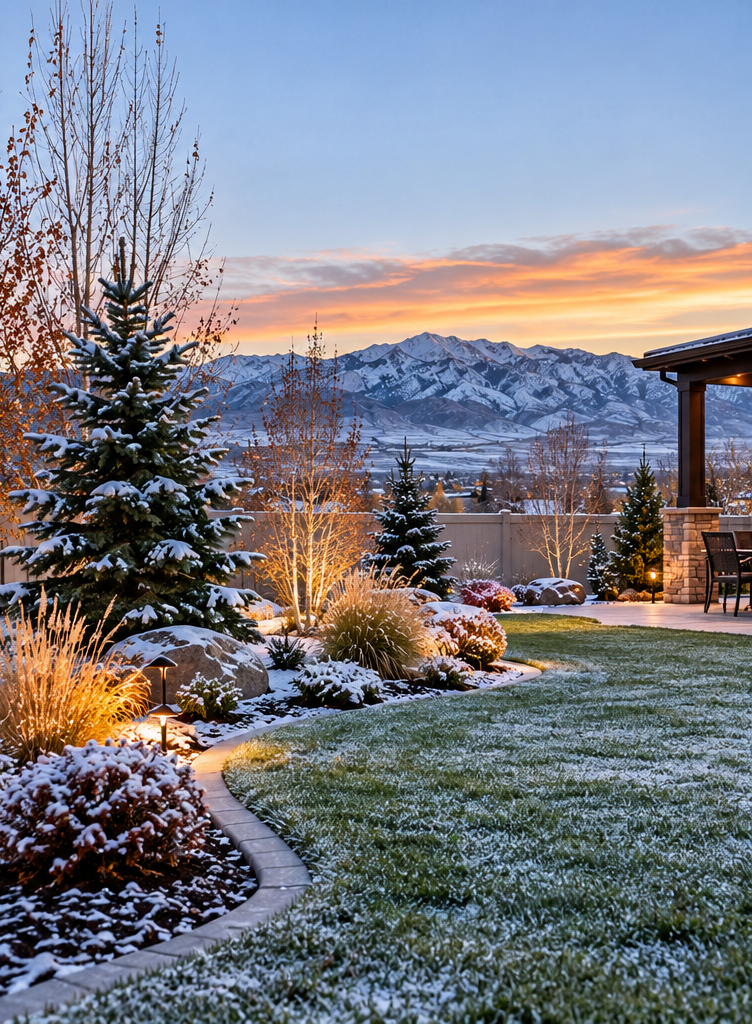
Central Utah landscapes can experience combinations of cold temperatures, bright sun, wind, dry air, snow, and periods when precipitation is limited.
Evergreens can be particularly susceptible to moisture loss because they retain foliage through winter. Newly planted deciduous trees and shrubs can also be vulnerable because their root systems are still limited.
If fall and winter remain unusually dry and the ground is not frozen, supplemental watering may sometimes be appropriate. Colorado State Forest Service, which provides guidance for a similarly dry Interior West climate, specifically notes that newly planted trees can require water during dry winter periods. Colorado State Forest Service
The key distinction is unfrozen soil. Don't try to compensate for dry conditions by watering frozen ground.
Avoid These Common First-Winter Mistakes
Most homeowners don't lose new landscaping because they ignored it completely. Problems often come from doing one seemingly reasonable thing at the wrong time.
Watch out for:
- Stopping fall watering too early just because temperatures have cooled.
- Continuing frequent shallow watering instead of encouraging deeper roots.
- Saturating soil around new trees and shrubs.
- Allowing thick piles of leaves to remain on new sod.
- Piling mulch against tree trunks.
- Applying fertilizer simply because the calendar says fall.
- Heavily pruning newly planted trees or shrubs without a specific reason.
- Allowing snow-removal equipment, vehicles, or piled snow to damage young plants.
- Forgetting about plants once the irrigation system has been winterized.
A Little Fall Care Can Pay Off for Years
The first year of a landscape is really an establishment year.
The sod, trees, and shrubs you see above ground are only part of what's developing. Below the surface, roots are beginning the long process of occupying the surrounding soil and creating the foundation for future growth.
Helping that process along doesn't require complicated winter treatments. For most landscapes, the priorities are straightforward: appropriate watering, healthy soil moisture, proper mulch, sensible plant protection, and avoiding unnecessary stress.
Those simple steps can give a newly landscaped yard a much better chance of entering spring ready to grow.
If you installed a landscape this year—or you're planning improvements for next season—C&K Landscaping can help you look at the entire property rather than treating turf, trees, irrigation, and hardscape as separate pieces. Explore C&K Landscaping's services and recent work, or request a free landscaping quote to schedule an on-site consultation. C&K Landscaping
Topics: