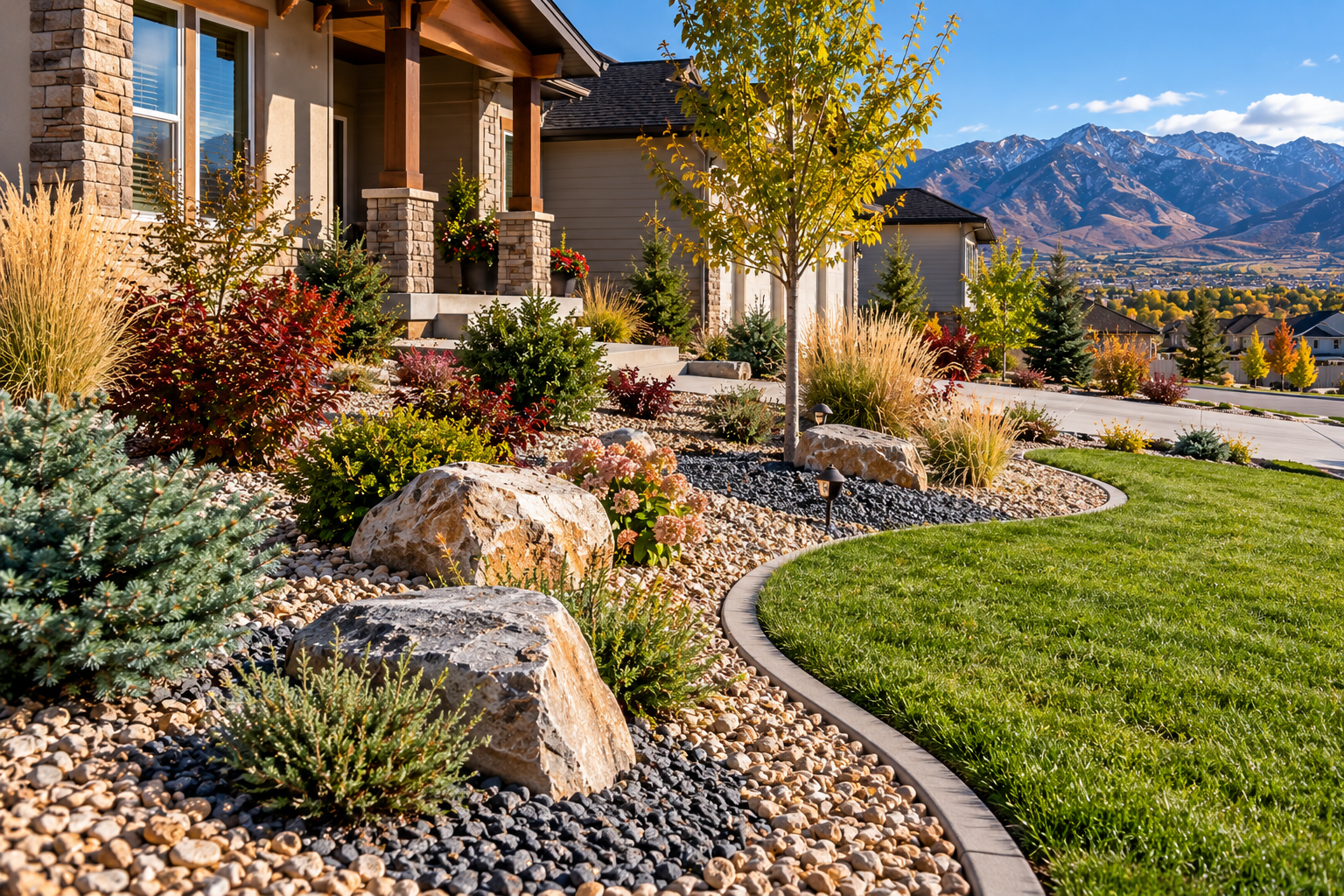
Rock landscaping is a popular choice for Utah homeowners, and for good reason. Decorative rock can create clean, attractive planting beds, reduce exposed soil, and help homeowners design outdoor spaces that require less water and maintenance than traditional lawns.
But when planning a new rock landscape, one question comes up frequently:
Do you really need landscape fabric underneath the rock?
Some homeowners consider landscape fabric essential for preventing weeds. Others have experienced weeds growing through their rock beds despite having fabric installed.
The truth is that landscape fabric can be useful in certain situations, but it isn't always necessary—and it certainly isn't a permanent solution to weeds.
Before installing decorative rock around your home, it's worth understanding what landscape fabric does, where it works best, and when another approach may be better for your Utah yard.
What Is Landscape Fabric, and What Does It Actually Do?
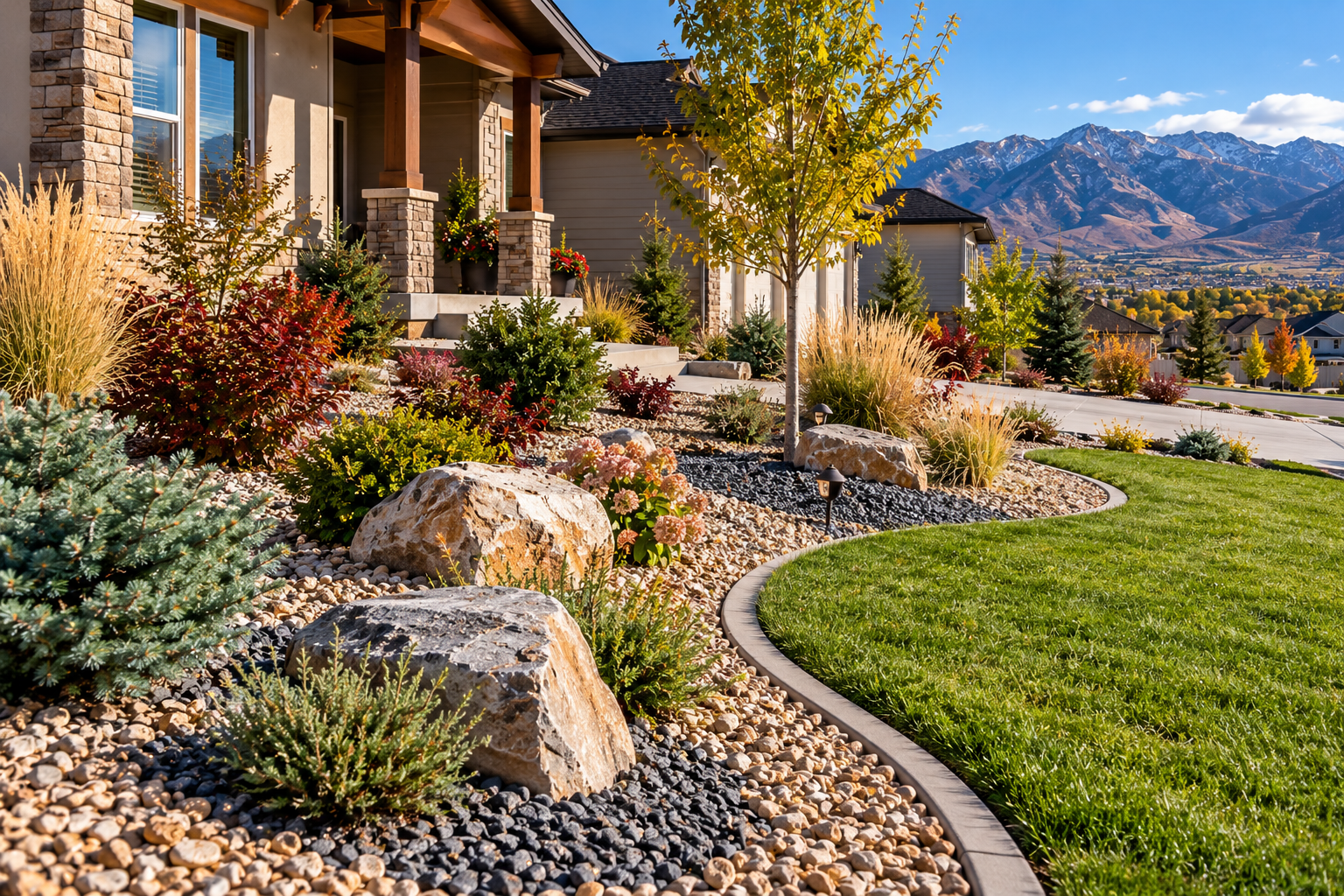
Landscape fabric, sometimes called weed barrier fabric, is a woven or nonwoven material installed over soil before adding decorative rock, gravel, or other mulch.
Its primary purpose is to create a physical barrier that helps suppress weeds growing from the soil underneath.
Quality landscape fabrics are designed to allow some water and air to move through the material, although permeability varies by product and can change over time.
Landscape Fabric Is Not the Same as Plastic Sheeting
This distinction is important.
Traditional plastic sheeting can significantly restrict water and air movement into the soil, making it a poor choice for many planted landscape beds.
Permeable landscape fabric is specifically designed for landscaping applications and generally allows more movement of water and air.
However, even permeable fabric can complicate soil maintenance and root growth over time.
Utah State University Extension discusses these differences in its guide to using mulches in Utah landscapes and gardens.
The Pros of Installing Landscape Fabric Under Rock
Landscape fabric has several advantages when used in the right location.
1. It Can Reduce Weed Growth From Below
A properly installed weed barrier blocks sunlight from reaching many weed seeds already present in the soil.
It can also make it harder for certain weeds to emerge through the rock layer.
This is especially helpful when converting an area of bare soil into a decorative rock bed.
However, existing perennial weeds should still be removed before installation. Fabric alone may not stop aggressive plants that spread through underground roots or rhizomes.
2. It Can Help Separate Rock From Soil
Another benefit is keeping decorative rock and underlying soil somewhat separated.
Without a barrier, soil movement, foot traffic, and repeated maintenance can gradually cause smaller landscape rocks to mix with the ground underneath.
Fabric may help preserve a cleaner separation between materials, particularly in areas with limited planting.
It does not replace proper grading, drainage, or a suitable compacted base where one is required.
3. It May Reduce Some Early Maintenance
When a rock bed is properly prepared, landscape fabric can help reduce the number of weeds emerging from the original soil during the early years.
That can mean less initial weeding.
For homeowners installing large decorative rock areas, this may be an attractive benefit.
The important thing to remember is that less maintenance does not mean no maintenance.
The Cons of Landscape Fabric Under Rock
Although landscape fabric has benefits, there are also disadvantages that homeowners should understand before installation.
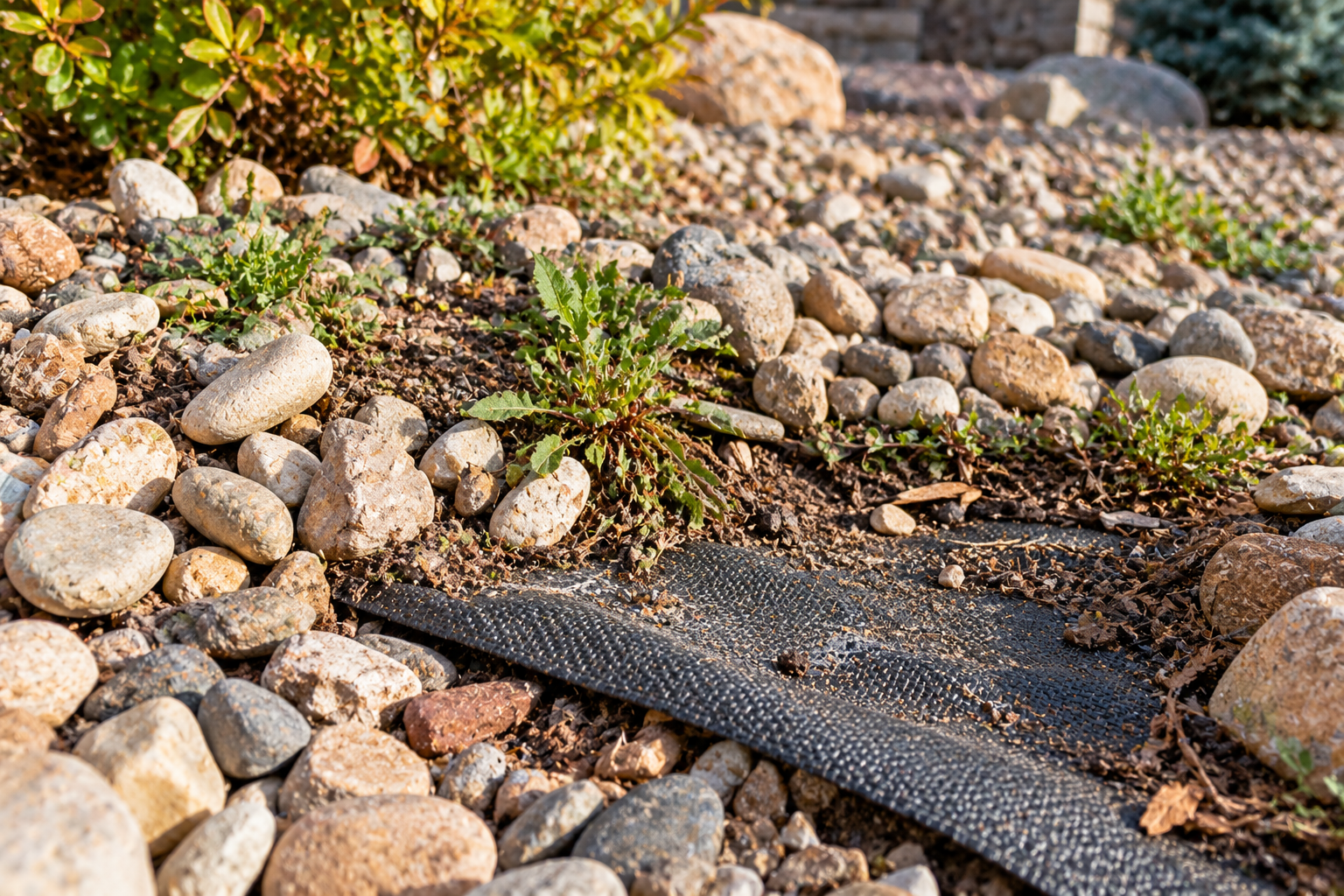
1. Weeds Can Still Grow on Top of the Fabric
This is one of the biggest misconceptions about rock landscaping.
Over time, wind carries dust, soil particles, leaves, and organic debris into the spaces between rocks.
These materials can collect above the fabric and create a place for new weed seeds to germinate.
Birds and wind can also introduce additional seeds.
The result? Weeds may begin growing directly in the accumulated material above the barrier.
Colorado State University Extension explains this problem in its weed management guidance, noting that weeds growing above landscape fabric can become difficult to remove.
2. Fabric Can Make Future Planting More Difficult
Imagine installing a beautiful rock bed this year and deciding to add more shrubs or ornamental grasses next spring.
With landscape fabric underneath, adding plants requires moving rock, cutting through the barrier, and making sure the new planting area allows appropriate root development.
Repeated cutting can also reduce the effectiveness of the original weed barrier.
For homeowners who enjoy changing their landscaping, fabric can become an inconvenience.
3. It Can Complicate Soil Improvements
Healthy soil is important even in landscapes that use decorative rock.
Plants still need suitable growing conditions, adequate moisture, oxygen, and nutrients.
Landscape fabric can make it more difficult to incorporate compost or other soil amendments into established planting beds.
This matters particularly around trees, shrubs, and perennials that may remain in place for many years.
4. Fabric Can Become Difficult to Remove
Landscape fabric doesn't last forever.
Depending on the material, installation, soil conditions, and exposure, fabric can deteriorate, shift, or become tangled with plant roots.
Removing old fabric from beneath decorative rock can be labor-intensive.
Homeowners may need to move the rock, remove the damaged barrier, address weeds, and reinstall the landscape materials.
A product intended to reduce maintenance can eventually create a larger renovation project.
When Does Landscape Fabric Make Sense?
Landscape fabric is not automatically a bad choice.
The key is deciding whether its benefits match the purpose of the space.
Decorative Rock Areas With Few or No Plants
Fabric may be useful in relatively permanent decorative rock areas where homeowners do not expect to add or relocate plants regularly.
Examples include certain rock borders, non-planted decorative strips, and defined gravel beds.
Even in these locations, proper weed removal and site preparation are essential.
Areas Where Material Separation Is Important
Some landscape designs benefit from keeping decorative rock separate from the underlying soil.
In these situations, an appropriate landscape fabric or geotextile may be considered.
The correct material depends on whether the area is decorative, planted, used for drainage, or expected to support foot traffic.
Projects With a Clear Long-Term Design
Landscape fabric generally makes more sense when the planting layout is already established and future changes are unlikely.
If you plan to redesign the area frequently, a more flexible approach may be preferable.
When Should You Avoid Landscape Fabric?
There are several situations where installing fabric may create more problems than it solves.
Around Growing Trees and Shrubs
Trees and shrubs expand their root systems as they mature.
A landscape bed should accommodate that growth while allowing access to water, air, and nutrients.
Although permeable fabric can be used around some plantings, it may complicate long-term soil care.
For beds containing numerous trees, shrubs, and perennials, consider whether the barrier will interfere with future maintenance.
In Flower Beds That Change Frequently
If you enjoy adding annual flowers, dividing perennials, or experimenting with new plants, fabric can become frustrating.
Every new planting requires cutting or moving the barrier.
Under Organic Mulch
Wood chips and shredded bark gradually decompose and contribute organic material to the soil.
Placing permanent fabric beneath them can reduce that benefit and make future soil improvements more difficult.
For many planted beds, a properly maintained organic mulch layer without permanent fabric is a practical alternative.
Better Alternatives to Landscape Fabric
If you decide landscape fabric isn't right for your project, there are other ways to manage weeds and create attractive planting beds.
1. Prepare the Soil Before Installing Rock
Good preparation is one of the most important parts of successful landscaping.
Before installing decorative rock:
- Remove existing weeds and unwanted vegetation.
- Address persistent perennial weeds and their root systems.
- Remove construction debris and unwanted materials.
- Correct grading or drainage problems.
- Prepare planting areas with appropriate soil conditions.
- Plan irrigation before installing the final surface material.
Skipping these steps can create maintenance problems regardless of whether fabric is installed.
2. Use an Appropriate Depth of Decorative Rock
A consistent layer of decorative rock helps cover exposed soil and can reduce opportunities for weed establishment.
The appropriate depth depends on the rock's size, shape, and intended use.
Very thin coverage may leave exposed soil and allow more weeds to develop.
However, excessively deep rock around plants can also create problems.
Keep rock away from direct contact with tree trunks and shrub stems, and avoid burying plant crowns.
3. Consider Organic Mulch in Planted Beds
Wood chips or shredded bark may be a better choice around certain trees and shrubs.
Organic mulch helps conserve moisture, moderates soil temperatures, and gradually contributes organic material as it decomposes.
It requires occasional replenishment, but it can be easier to maintain and modify than fabric-covered rock beds.
4. Use Smart Plant Placement
A thoughtfully designed landscape can help reduce weed pressure.
Grouping plants according to their water needs, providing appropriate spacing, and selecting species suited to Utah's climate can create healthier planting areas.
As plants mature, their foliage may also shade portions of the soil, reducing some opportunities for weed growth.
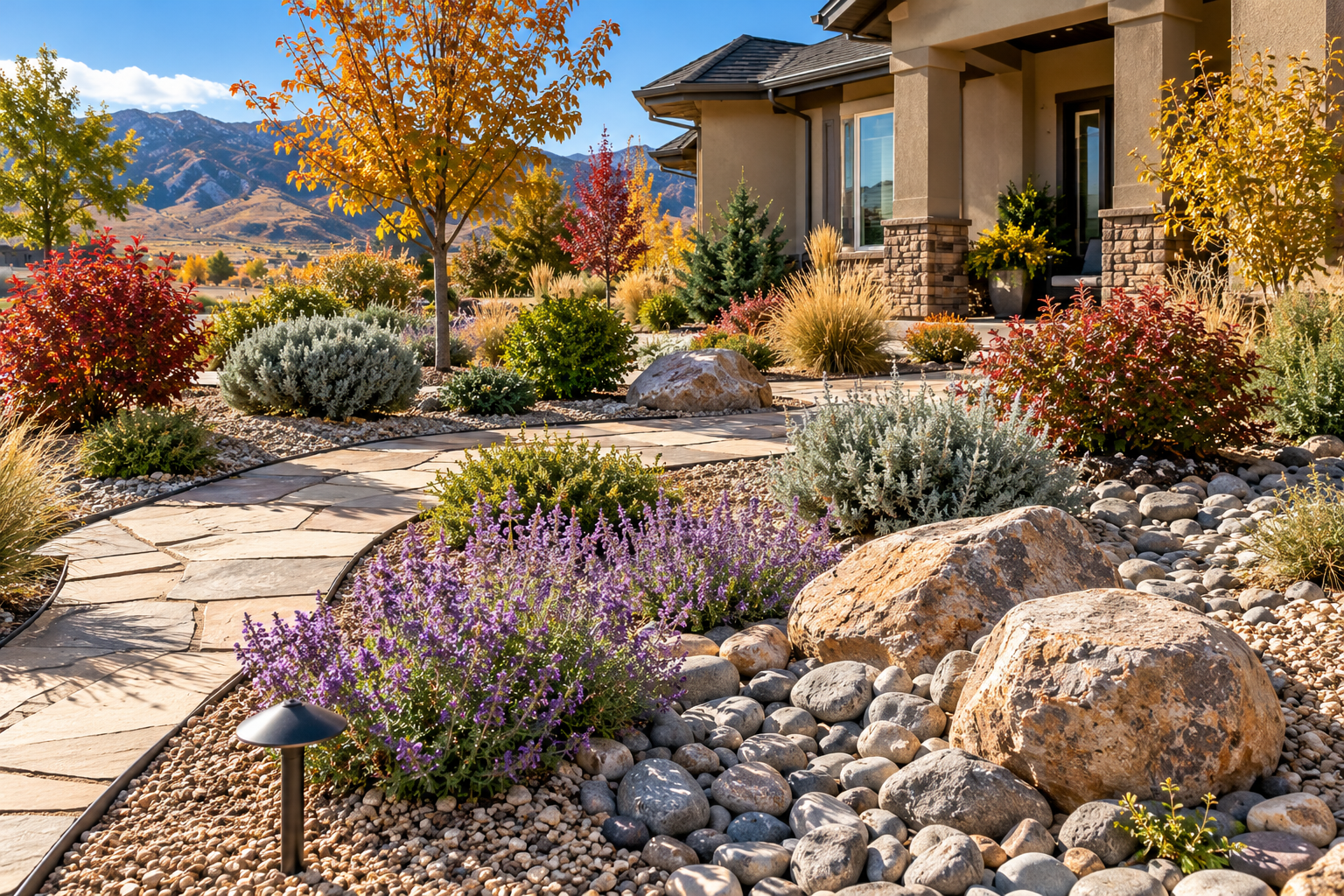
For homeowners considering a new rock landscape, C&K Landscaping offers professional landscape design and installation, including planting plans, bed preparation, drought-tolerant plant selection, and mulching.
How to Decide What's Best for Your Utah Landscape
There isn't one perfect answer for every yard.
Before deciding whether to install landscape fabric under rock, consider these questions:
Will the area contain plants?
A mostly decorative rock area has different needs from a bed filled with trees, shrubs, and perennials.
Will you change the landscaping later?
If you expect to add plants or redesign the space, permanent fabric may make future work more difficult.
What kind of weeds are already present?
Persistent perennial weeds need to be addressed before installing rock or fabric.
How will the area be watered?
Irrigation should be planned around the plants and soil conditions, not simply the presence of a weed barrier.
How much maintenance are you willing to do?
Rock beds still require occasional weeding, debris removal, and general upkeep.
Is the rock decorative or functional?
Decorative planting beds, drainage areas, and gravel pathways may require different installation materials and techniques.
Taking time to answer these questions can prevent unnecessary expense and frustration later.
Does Rock Landscaping Mean a Maintenance-Free Yard?
Not quite.
Decorative rock can reduce some maintenance tasks, but it doesn't eliminate them.
Even well-designed rock landscapes may require:
- Removing windblown leaves and debris.
- Pulling occasional weeds.
- Adjusting irrigation as plants mature.
- Cleaning or redefining bed edges.
- Repositioning displaced rock.
- Monitoring plant health.
- Maintaining drainage pathways.
The goal should be a low-maintenance landscape, not an unrealistic promise of a maintenance-free yard.
This is particularly important in Central Utah, where dry conditions, wind, temperature fluctuations, and seasonal weather can influence how landscapes perform.
Build a Rock Landscape That Works for the Long Term
Landscape fabric can be useful beneath decorative rock, but it should never be considered a guaranteed weed-control solution.
For some projects, it provides helpful separation and initial weed suppression.
For others, especially planting beds that will change or contain many growing plants, it may be better to skip the fabric and focus on proper preparation, appropriate mulch, healthy soil, and thoughtful design.
The best choice depends on your property, the purpose of the landscape, and how you want to maintain it over time.
At C&K Landscaping, we help Central Utah homeowners create outdoor spaces that combine attractive design with practical, long-term performance.
Whether you're planning a decorative rock installation, a water-wise front yard, or a complete landscape transformation, our team can help you evaluate the options.
Explore our landscaping services or request a free landscaping estimate.
C&K Landscaping serves Richfield, Salina, Gunnison, Manti, Ephraim, Monroe, and surrounding Central Utah communities.
Let's create a landscape that looks beautiful and makes sense for the way you live.
Topics: