Fall in Central Utah can change quickly.
One week you're enjoying warm afternoons in the yard. Not long after, overnight temperatures begin dropping toward freezing and winter suddenly feels much closer.
That makes fall one of the most important times to look over your landscape.
A little work now can help protect irrigation equipment, reduce winter damage, keep the yard cleaner, and give lawns and plants a better start when spring returns.
The goal isn't to make your yard perfect before winter.
It's to take care of the things that matter most before freezing weather makes them harder—or more expensive—to fix.
Use this fall landscaping checklist as you prepare your Utah property for winter.
1. Walk the Entire Yard Before You Start
Before pulling out the rake or shutting down sprinklers, take one slow walk around the property.
Look for:
- Broken sprinkler heads
- Areas that stayed unusually wet during summer
- Dry areas in the lawn
- Damaged edging
- Settled soil
- Loose pavers
- Dead or struggling plants
- Cracked irrigation components
- Weeds that are going to seed
- Areas where water drains toward the house
- Tree or shrub damage
- Outdoor lighting that isn't working properly
Fall is a good time to notice problems because the growing season is winding down and you can see which parts of the landscape performed well—and which didn't.
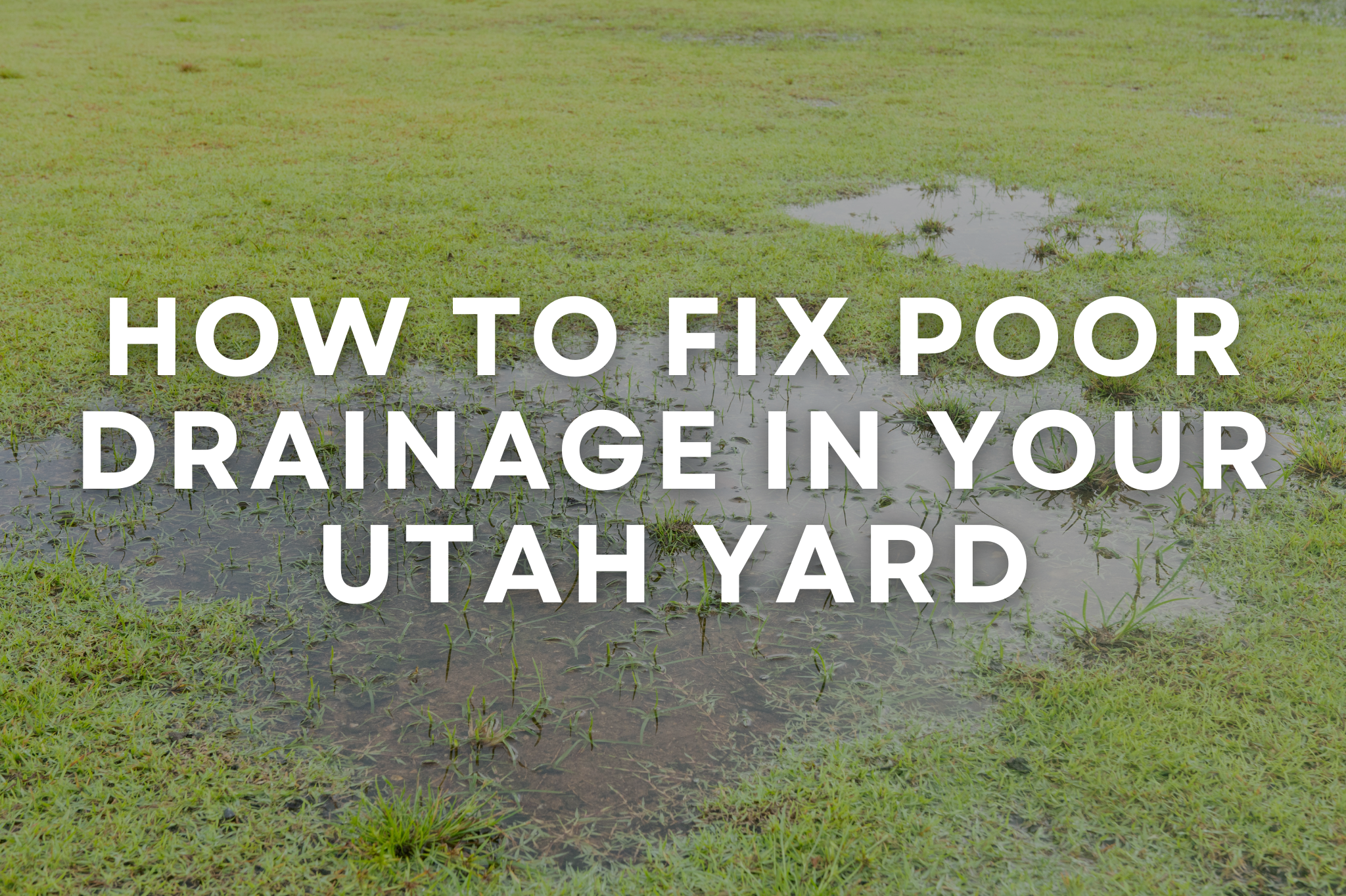
If water has been collecting in areas of your property, don't automatically assume adding more soil will solve it. C&K's guide to fixing poor drainage in a Utah yard explains how grading, compacted soil, irrigation, and runoff can all contribute to standing water.
Make a short list of what needs attention now and what can become a spring project.
2. Adjust Irrigation as Temperatures Drop
A sprinkler schedule that made sense during July may be far too much water for a cool September or October week.
Plants generally need less supplemental irrigation as temperatures fall and days become shorter.
Continuing to water on a midsummer schedule can waste water and contribute to soggy soil or runoff.
The EPA recommends adjusting irrigation schedules as weather and seasonal conditions change rather than leaving a clock-based system on the same program all year.
If your system uses smart irrigation controls, this adjustment may happen more automatically. C&K explains how weather-responsive technology can improve watering efficiency in its article about smart sprinkler systems for Utah lawns.
Even with a smart system, fall is a good time to inspect each zone for leaks, broken heads, poor spray patterns, and water landing on sidewalks or driveways.
3. Winterize the Sprinkler System Before Freezing Weather
This is one fall task Utah homeowners should not leave until the last minute.
Water left inside irrigation lines and components can freeze, expand, and damage the system.
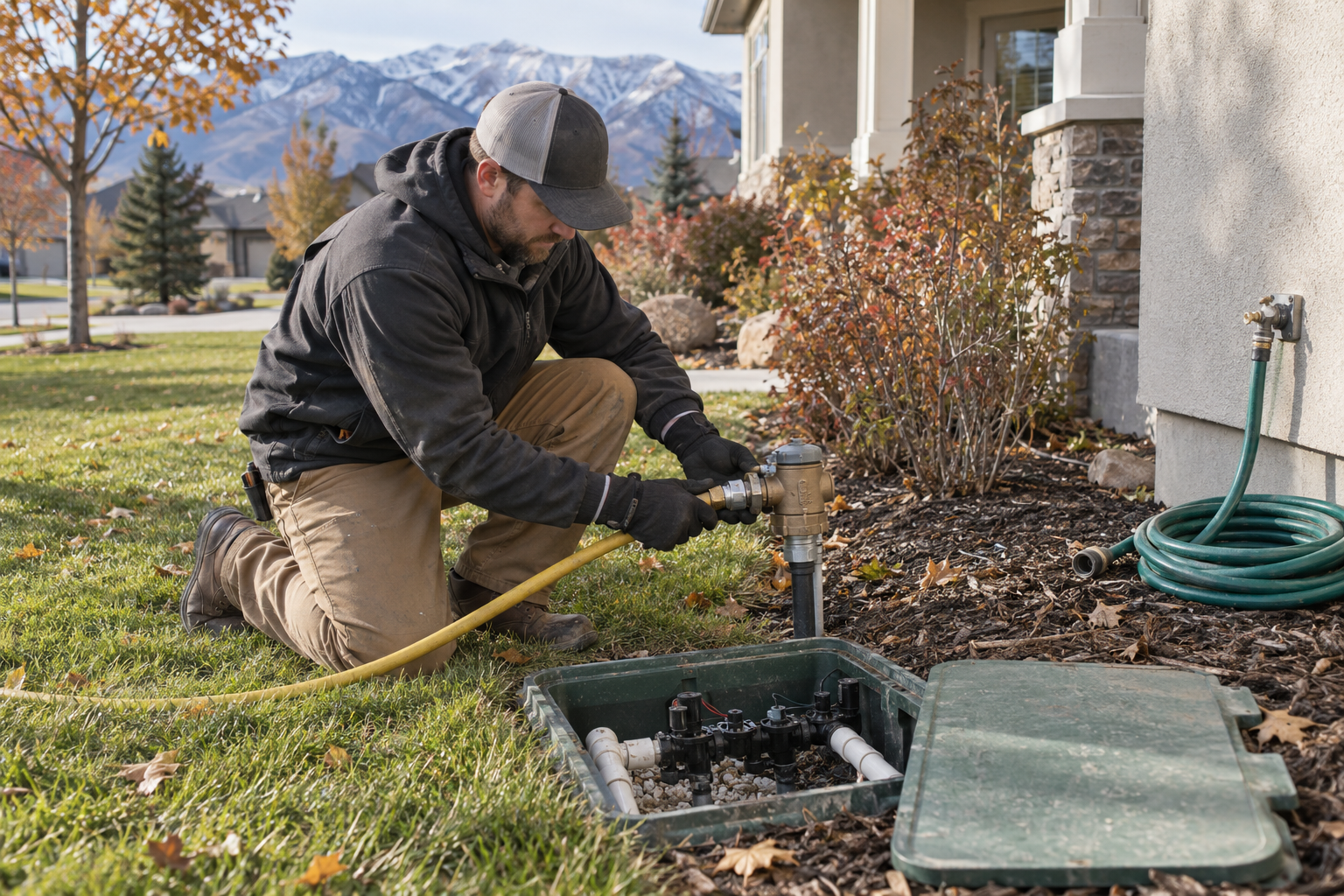
The EPA recommends shutting off the water supply and draining irrigation lines before freezing temperatures arrive.
Depending on your irrigation system, winterization may involve:
- Shutting off the irrigation water supply
- Draining accessible water
- Protecting exposed components
- Blowing water from irrigation lines when appropriate
- Disconnecting hoses
- Protecting outdoor faucets as needed
- Making sure controllers are set appropriately for winter
Not every irrigation system is designed exactly the same way, so avoid assuming that simply turning off the timer is enough.
If you aren't sure how your system should be winterized, have it inspected before temperatures drop.
A sprinkler repair in spring is a frustrating way to discover that water was left in the system all winter.
4. Don't Stop Caring for Trees and Shrubs Too Early
Cooler weather does not necessarily mean established landscape plants no longer need moisture.
Utah State University Extension notes that trees and shrubs can enter winter under stress if the soil is too dry before the ground freezes. Adequate fall moisture can help woody plants tolerate winter conditions.
Pay particular attention to:
- Newly planted trees
- Newly planted shrubs
- Evergreens
- Plants in exposed or windy locations
- Landscape areas that did not receive much precipitation
This does not mean keeping the sprinklers running as if it were August.
The goal is appropriate moisture before the soil freezes—not saturated ground.
If fall precipitation has been limited, trees and shrubs may benefit from a deep watering before freeze-up. USU also recommends watering evergreens when conditions are dry and the ground is still unfrozen.
5. Give Newly Installed Landscaping Extra Attention
If you installed sod, trees, shrubs, or perennial beds this year, their first winter deserves a little extra preparation.
New plants generally have less-established root systems than mature landscaping.
Before winter:
Check the soil moisture.
Make sure trees are properly staked only if staking is still necessary.
Inspect plants for damage.
Remove weeds competing around root zones.
Check that mulch has not been piled against tree trunks.
Make sure irrigation actually reached new plantings throughout the season.
A young tree that looks healthy above ground can still enter winter stressed if its roots have not received adequate water.
This is one reason fall landscape care should focus on what is happening below the surface, not just how tidy the yard looks.
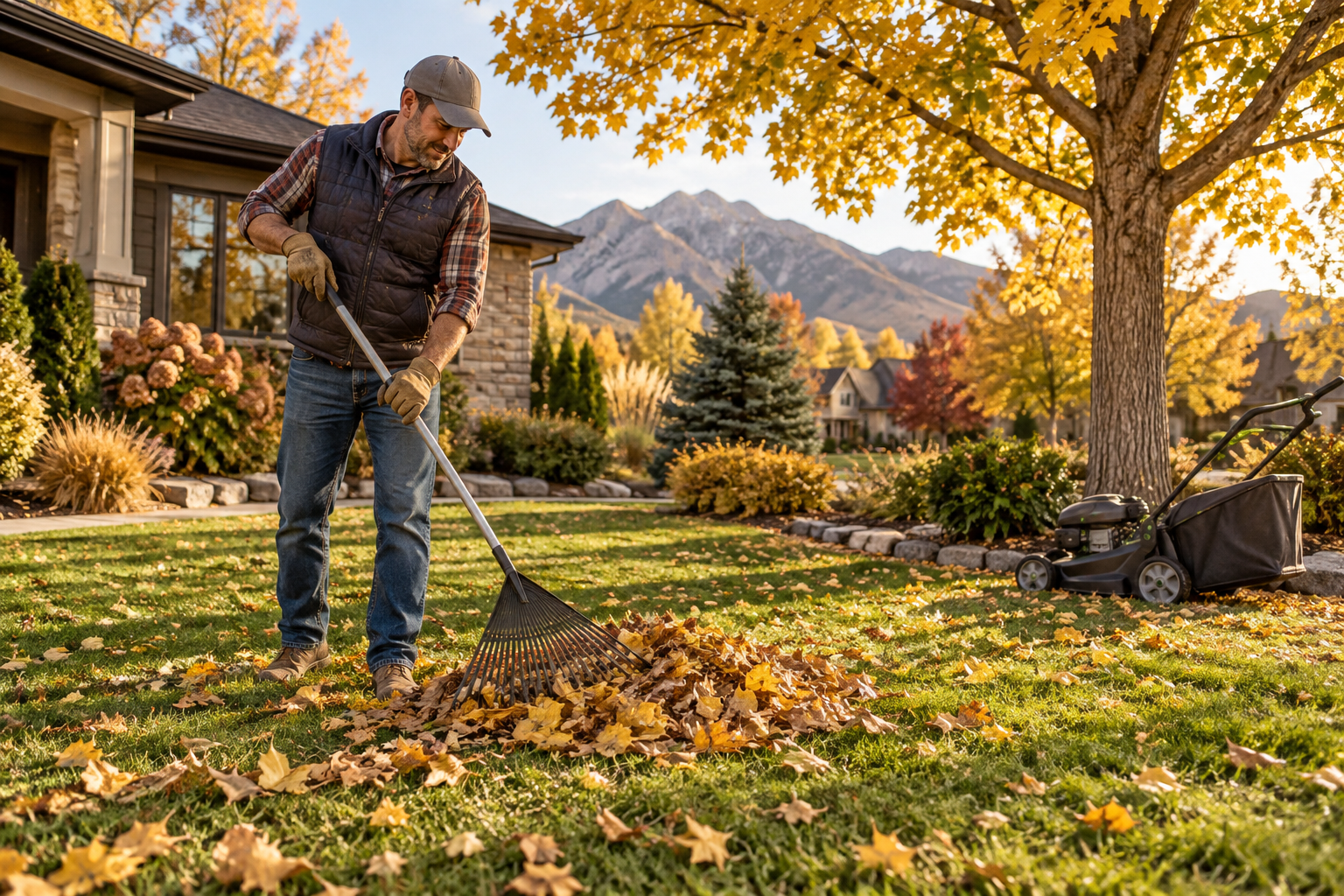
6. Clean Up Leaves—but Don't Let the Lawn Become Bare and Overworked
Leaves are part of fall, but a thick mat of wet leaves sitting on turf for extended periods can block light and create conditions that are not ideal for the lawn.
Keep heavy leaf buildup off grassy areas.
That doesn't necessarily mean every leaf has to go into the trash.
Healthy, disease-free organic material may sometimes be composted or used appropriately elsewhere in the landscape.
Utah State University Extension recommends removing leaf litter from lawns and continuing to mow while the grass is still actively growing.
Your final mow should leave the lawn tidy going into winter rather than long and matted.
Avoid scalping the grass dramatically just because winter is coming.
7. Consider Whether Your Lawn Needs Fall Fertilization
Fall can be a useful fertilization period for some Utah lawns, particularly lawns that experienced moderate or heavy use during summer.
But more fertilizer is not automatically better.
The right application depends on the turf, its condition, previous fertilization, and the product being used.
USU Extension notes that lawns receiving moderate to heavy traffic may benefit from a late-season fertilizer application and recommends following product directions carefully.
If your lawn struggled all summer, don't assume fertilizer is the answer.
Poor turf can also result from:
- Compacted soil
- Incorrect irrigation
- Poor drainage
- Excessive shade
- Inappropriate grass varieties
- Insects or disease
- Mowing problems
Sometimes diagnosing the reason for the poor lawn is more valuable than simply feeding it again.
8. Wait Until the Right Time to Cut Back Plants
The first cool night does not mean every perennial needs to be cut to the ground immediately.
Allow plants to naturally move toward dormancy.
After foliage has been damaged by a hard frost and dies back, many annuals and perennials can be cleaned up.
USU Extension recommends cutting back annuals and perennials after the first hard frost, with diseased plant material discarded rather than composted.
Fall cleanup is also a good opportunity to remove:
- Dead annuals
- Diseased foliage
- Garden debris
- Weeds
- Fallen fruit
- Damaged plant material
A cleaner landscape going into winter can mean fewer surprises waiting underneath the snow in spring.
9. Be Careful With Fall Tree and Shrub Pruning
Fall cleanup often makes homeowners want to prune everything in sight.
That can be a mistake.
Heavy fall pruning can stimulate or interfere with the dormancy process of some woody plants, leaving them more vulnerable to winter injury.
USU Extension advises against heavy pruning of trees and shrubs in fall and recommends waiting for the appropriate pruning period based on the plant.
You can still address clearly broken, hazardous, or damaged branches when necessary.
But don't automatically give every tree and shrub a major haircut just because you're cleaning the yard.
Pruning should have a purpose.
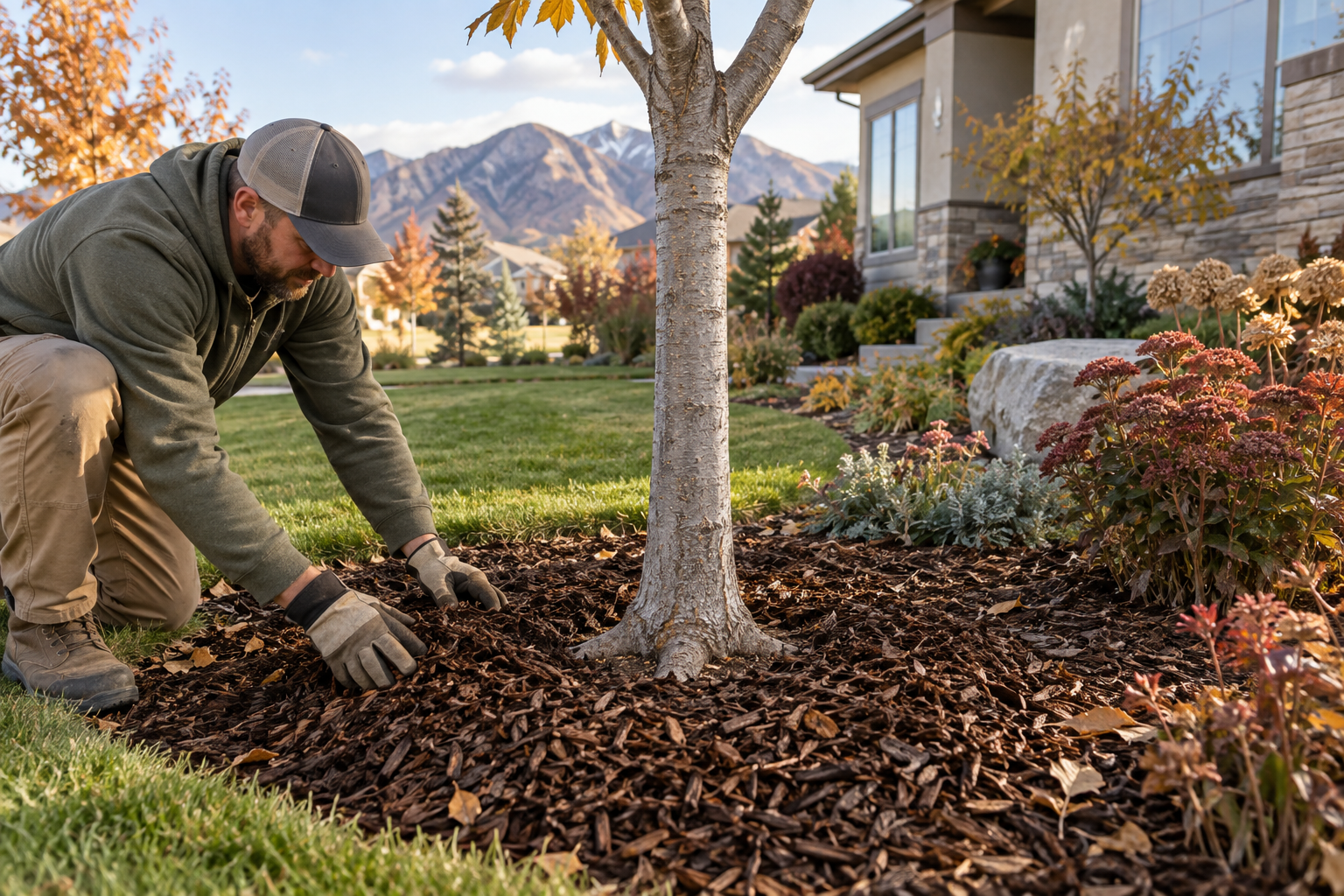
10. Check Mulch Around Trees and Planting Beds
Mulch can help conserve soil moisture and moderate soil temperatures around plants.
But placement matters.
USU Extension recommends leaving several inches of mulch-free space around the base of woody plants instead of piling material directly against the trunk.
Check your beds for:
- Areas where mulch has become too thin
- Mulch piled against trunks
- Exposed soil around newer plants
- Weed growth
- Areas where mulch has washed away
Think of mulch as a layer over the root zone—not a mound around the tree trunk.
11. Check Hardscaping Before Snow Hides the Problems
Walk your patio, pathways, steps, and retaining areas.
Look for:
- Pavers that have shifted
- Loose edging
- Low spots collecting water
- Cracks
- Settling
- Drainage issues
- Trip hazards
A minor issue in fall may become worse after repeated freezing and thawing.
Photograph anything you want to address later.
That way, even if snow covers the yard for several months, you have a record of where the problem was.
This is also a smart time to begin thinking about larger improvements for next year. C&K notes that fall can be a good season for certain maintenance and landscaping projects, while winter can provide valuable planning time before the busy spring season.
12. Put Away Hoses, Tools, and Yard Equipment Properly
Your landscaping includes more than plants.
Before freezing weather arrives:
- Disconnect garden hoses
- Drain hoses before storing them
- Clean hand tools
- Sharpen tools that need it
- Store fertilizers and lawn products safely
- Prepare lawn equipment for winter storage
- Clean up outdoor work areas
USU Extension specifically recommends disconnecting hoses from outdoor spigots, cleaning tools, and preparing lawn equipment for winter storage.
These jobs are easy to postpone.
They're much less pleasant when you're trying to do them during the first snowstorm.
Quick Utah Fall Landscaping Checklist
Before winter arrives, check these off:
Lawn
- Keep heavy leaves off the grass
- Continue mowing while growth continues
- Evaluate whether fall fertilizer is appropriate
- Address obvious bare, wet, or damaged areas
Irrigation
- Reduce watering as weather cools
- Check for leaks or damaged heads
- Shut down and winterize before freezing weather
- Disconnect hoses
Trees and Shrubs
- Check soil moisture
- Deep-water when needed before ground freeze
- Inspect newly planted trees and shrubs
- Avoid unnecessary heavy fall pruning
Beds
- Remove dead or diseased plant material
- Control weeds
- Check mulch depth and placement
- Clean up annuals after frost
Hardscape
- Look for loose or settling pavers
- Check drainage
- Photograph repairs needed for spring
Equipment
- Clean tools
- Store hoses
- Prepare lawn equipment for winter
- Put away seasonal supplies
A Little Fall Work Can Prevent a Bigger Spring List
Fall yard care isn't about squeezing one more major landscaping project into the year.
It's about protecting what you already have.
Shutting down irrigation correctly can help prevent freeze damage.
Cleaning leaves and debris keeps the property manageable.
Checking trees, shrubs, and new plantings helps them enter winter in better condition.
And noticing drainage, hardscape, or irrigation problems now gives you time to plan instead of discovering everything at once next spring.
C&K Landscaping serves homeowners throughout Central Utah, including Richfield, Salina, Gunnison, Manti, Mt. Pleasant, Ephraim, Monroe, Central Valley, Elsinore, Annabella, and surrounding communities. The team provides lawn care, landscape design, irrigation, hardscaping, outdoor lighting, and complete landscape services.
If your fall checklist is getting longer than your available weekends, C&K can help you determine what needs attention now, what can wait until spring, and what improvements are worth planning for next season.
A healthier spring landscape often starts with the work you do before the first real freeze arrives.
Topics: